Strengthening Pharmacists’ Competencies in Dry Eye Disease Management, AAM and Alcon Hold Knowledge Sharing Session
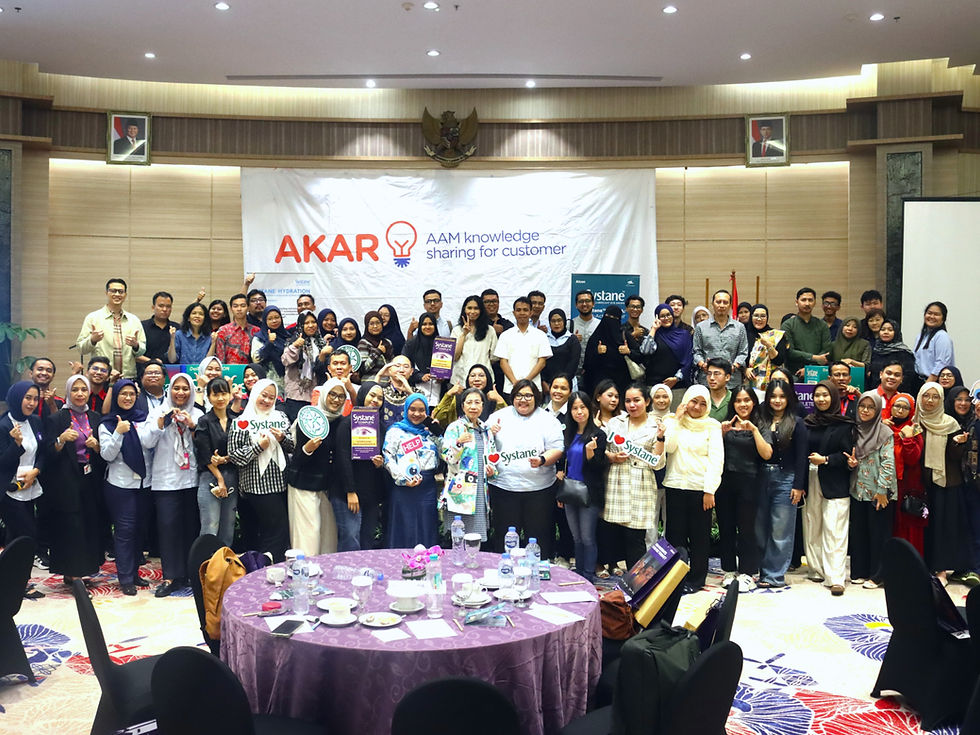
Pharmacists play a vital role in helping patients access appropriate solutions amid the growing prevalence of dry eye disease (DED). Driven by lifestyle changes, increased digital device usage, environmental factors, and an aging population, a deeper understanding of the disease and its treatment options has become increasingly important to support optimal pharmaceutical care.
As part of its commitment to strengthening pharmacists’ competencies, PT Anugrah Argon Medica (AAM) organized AAM Sharing Knowledge (AKAR), a continuous professional education platform that brings together healthcare professionals, medical experts, and principal partners to exchange the latest scientific knowledge and best practices in healthcare.
In this edition, AKAR collaborated with Alcon and was attended by 65 representatives from pharmacies across Jakarta on Wednesday, June 24, 2026. The session focused on the management of Dry Eye Disease, aiming to enhance pharmacists’ understanding in providing appropriate recommendations based on patients’ clinical needs.
Mrs. Tarida Nadapdap, Group Business Marketing Manager, CHP & Specialty at AAM, highlighted that increased exposure to digital screens, prolonged air conditioning use, environmental factors, and aging have all contributed to the rising incidence of dry eye disease. She emphasized that these trends require pharmacists to better understand patients’ needs in order to provide suitable recommendations.
“Environmental exposure, the increasing use of smartphones and laptops, modern lifestyles, and aging are all contributing to the growing prevalence of dry eye disease. It is therefore essential for pharmacists to understand patients’ symptoms and needs so they can recommend the most appropriate products based on each individual’s condition,” said Mrs. Tarida.
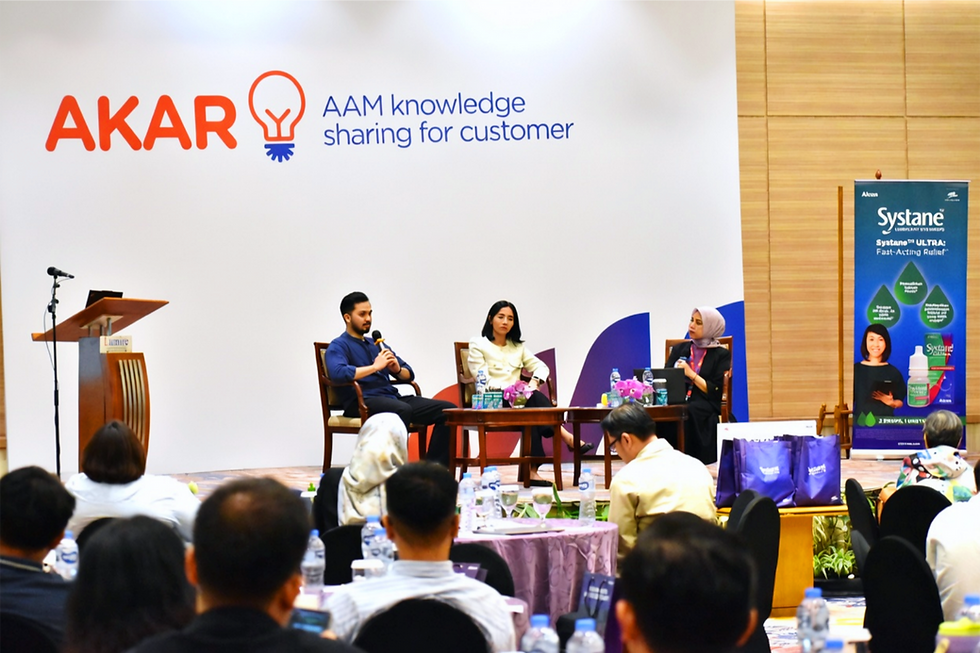
During the scientific session,dr. Rino Nugrahaputra, BMedSc (Hons), Sp.M., explained that approximately 1.4 billion people worldwide are affected by dry eye disease. He noted that the condition may be triggered by various factors, including dry environments, prolonged exposure to air conditioning, extended screen time, contact lens use, and underlying medical conditions such as diabetes and autoimmune diseases.
dr. Rino further explained that Dry Eye Disease can be classified into three main types: Aqueous Deficient Dry Eye (ADDE), Evaporative Dry Eye (EDE), and Mixed Dry Eye, each requiring a different therapeutic approach. As such, selecting the appropriate artificial tears as first-line therapy should be tailored to the patient’s specific condition to achieve optimal treatment outcomes.
dr. Astriviani Switania, Sp.M., highlighted the importance of selecting artificial tears that align with each patient’s needs. She explained that Systane’s HP-Guar Adaptive Meshwork Technology forms an adaptive protective matrix on the ocular surface, helping maintain moisture and stabilize the tear film for longer-lasting relief.
“Numerous clinical studies have demonstrated that Systane helps reduce both the signs and symptoms of dry eye disease while improving long-term patient comfort,” dr. Astriviani explained.
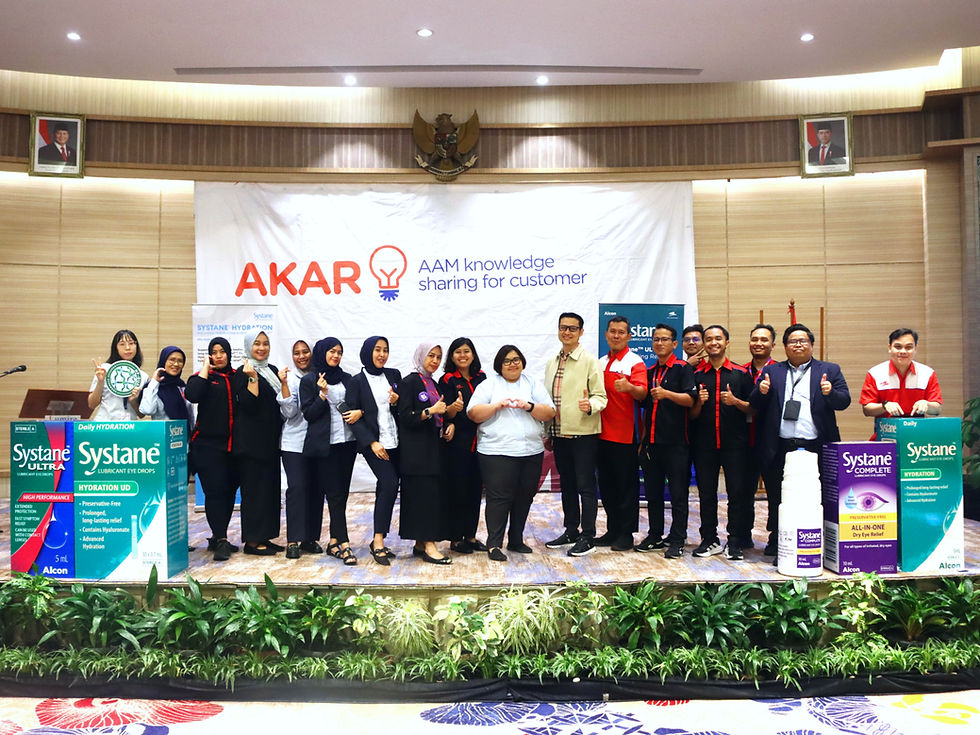
As part of its collaboration with Alcon, AAM also introduced the Systane portfolio available in Indonesia to address the needs of patients across different severities of Dry Eye Disease.
The portfolio is designed to support healthcare professionals in tailoring product recommendations according to each patient’s clinical characteristics, enabling more effective and personalized Dry Eye Disease management.
Through AKAR, AAM continues to strengthen its role as a strategic partner for pharmacists by delivering science-based education and fostering collaboration with principal partners and leading healthcare experts.
Moving forward, AAM remains committed to providing educational programs that address the evolving needs of healthcare services, empowering pharmacists to deliver more accurate, patient-centered, and value-added pharmaceutical care for the community.


